 Terraria Wiki Fieldbook
terraria night's edge: a practical craft and upgrade guide
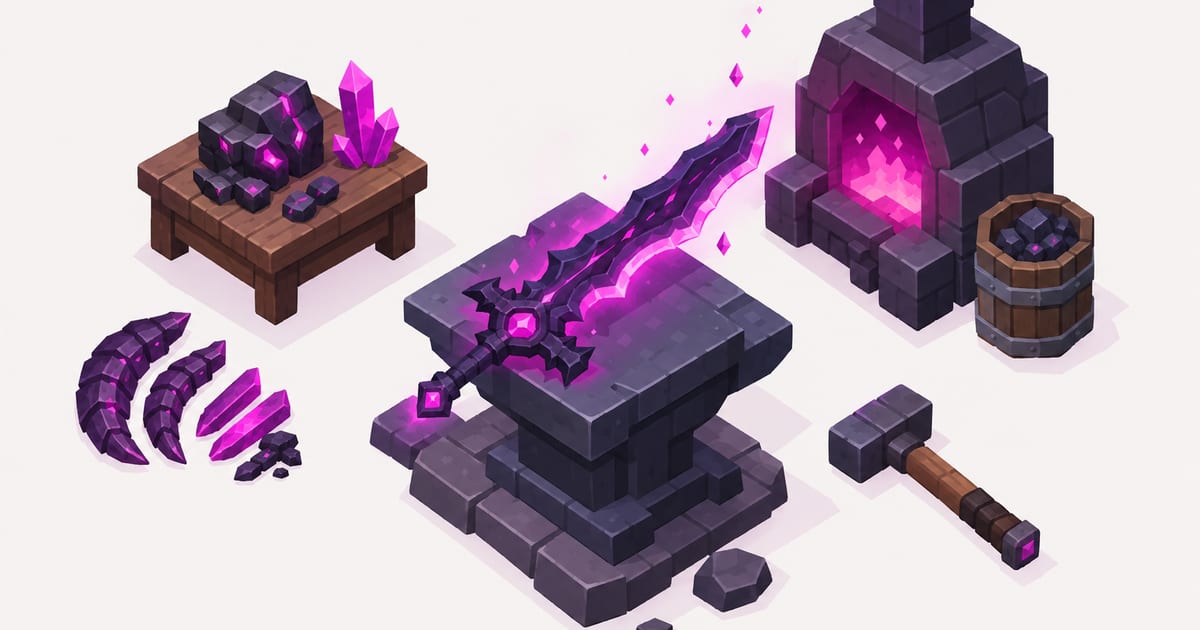
terraria night's edge is the sword that turns four separate pre-Hardmode blades into one milestone weapon. It is not a lucky drop, and it is not a Hardmode reward; it is a crafting project you can finish before the Wall of Flesh. That makes it easy to chase too early, and easy to over-farm once you are close. This guide is about the practical route: what to collect, in what order, how to use the blade once you have it, and when to stop. If you are still deciding whether melee is your lane, our terraria class guide is the place to start.
What terraria night's edge actually is
The weapon is a pre-Hardmode melee sword, built at a Demon Altar or Crimson Altar from four components. In the classic recipe those are the Blade of Grass, the Muramasa, the Fiery Greatsword, and either the Light's Bane or the Blood Butcherer. Your world's evil determines which of the last two you can make. You do not need both, and you cannot use the other world's evil blade in a normal single-world run unless you bring materials across.
Classic matters because Terraria recipes can change between updates. Before you plan a long farming session, open the crafting menu next to the altar with all four candidate swords in your inventory. If the sword entry does not appear, one component is missing or your version wants something different. The in-game crafting menu is the authority; a fan guide is only a checklist.
Why bother? For a melee run, it is a genuine power spike before Hardmode, and it is part of the upgrade line that leads to the True Night's Edge and eventually the Terra Blade. For a mage, ranger, or summoner run, it is optional. It is still worth crafting if you like collecting swords, but do not let it stall your actual class progression. The blade is a bridge, not a finish line.
Crafting terraria night's edge without wasting a night
Treat the project as four short errands, not one giant grind. The order below keeps you from carrying fragile components into fights where you do not need them.
Blade of Grass: jungle run
The Blade of Grass is the jungle piece. You need Jungle Spores, which grow on Jungle Grass, and Stingers from jungle enemies. Bring a decent pickaxe, a stack of torches, and a way to deal with Hornets. Do not tunnel blindly through the Underground Jungle if you are under-geared; the Jungle is happy to punish that. Collect spores on the surface layer first, then push deeper for stingers. Craft the blade at an Iron or Lead Anvil as soon as you can, and favorite it so you do not sell it by accident.
Muramasa: dungeon lock
The Muramasa comes from Locked Gold Chests in the Dungeon, so Skeletron is a hard gate. If you have not beaten Skeletron yet, do that first; our terraria bosses guide covers the fight order. Bring Golden Keys, clear rooms carefully, and do not break every chest you see before checking it. Dungeon enemies drop keys, but the drop rate is not something to rely on in a speedrun. If you find a Muramasa early, put it in a chest at home or favorite it immediately. It is the component players most often lose track of.
Fiery Greatsword: underworld run
The Fiery Greatsword is the hellstone piece. You need Hellstone Bars, which means mining in the Underworld and smelting at a Hellforge. This is the step where preparation pays off: Obsidian Skin potions, a good pickaxe, and a clear path back to a safe spot matter more than raw damage. Check our potions in terraria guide for the buffs worth carrying. Do not fight every Underworld enemy on the way down; mine a safe pocket, smelt, and leave.
Light's Bane or Blood Butcherer: evil blade
The final component is the evil-biome sword. Corruption worlds make the Light's Bane from Demonite Bars; Crimson worlds make the Blood Butcherer from Crimtane Bars. You need the ore and the bars, which usually means fighting your world's evil boss and mining the ore that follows. If you have already beaten that boss, this is often the quickest step. If not, do it before the Dungeon so you have the pickaxe tier you need for Hellstone.
Using terraria night's edge in fights
Once crafted, the Night's Edge is a close-range crowd clearer with a wide swing. It is not a replacement for mobility. Use it to cut through Dungeon rooms, jungle swarms, and late pre-Hardmode events, and swap to a safer option when a boss punishes you for standing still.
Against the Wall of Flesh, the blade can work, but only if you have a long bridge, movement accessories, and buffs. The Wall is a positioning fight first and a damage check second. Do not tunnel into the ceiling trying to land a swing. If you are struggling, check the terraria bosses progression notes and fix your arena before you blame the sword.
A few practical habits:
- Favorite the Night's Edge as soon as it is crafted. It is a crafting material later, and you do not want to sell it in an inventory clean-out.
- Keep a backup melee weapon with more range for phases where contact damage is too expensive.
- Reforge only when you can afford to lose the money. A bad reforge is not a crisis; it is a gold sink.
- Use the blade for crowd control, not as an excuse to face-tank. The best sword in the world does not fix standing in a hitbox.
Upgrades after terraria night's edge
Do not throw the blade away when Hardmode starts. In the standard progression it is a component for the True Night's Edge, and that line continues toward the Terra Blade. Exact Hardmode recipe steps and drop sources have changed across updates, so check the crafting menu and the current drop table in your version before you grind a specific event. The safe habit is simple: keep the Night's Edge, label the chest, and do not use it as a placeholder weapon for a friend.
When should you stop farming for it? If you have all four components and an altar, stop and craft. Do not keep rerolling world evil or generating new worlds for a perfect version; the weapon does not need a modifier to be useful. If you are not playing melee, craft it only if you enjoy the collection or plan to make the Terra Blade later. Otherwise, spend that time on armor, accessories, and arena building.
Common mistakes and quick checks
- Missing the altar: stand next to a Demon or Crimson Altar with all four swords in your inventory.
- Wrong evil blade: a Corruption world makes Light's Bane; a Crimson world makes Blood Butcherer. You need the one your world can make.
- Selling a component: favorite every blade the moment you get it. Inventory clean-outs are the real boss fight.
- Forgetting the anvil tier: some components need a specific anvil, so check the crafting station before you blame the menu.
- Over-farming the Underworld: mine a safe pocket, smelt, and leave. You can always come back.
If the crafting menu still refuses, compare your inventory to the four-component list one item at a time. Terraria does not hide the requirement; it just does not always explain which requirement you are missing.
The final check is simple: if you have the Blade of Grass, the Muramasa, the Fiery Greatsword, and the correct evil blade, and you are standing at an altar, you are done. terraria night's edge is a milestone, not a myth; craft it, use it where it fits, and keep it for the upgrade line.
Frequently Asked Questions
Is the terraria night's edge worth crafting?
For a melee run, yes. It is a strong pre-Hardmode sword and a step toward the True Night's Edge and Terra Blade line. For mage, ranger, or summoner builds, it is optional. Craft it if you enjoy sword collecting or plan to make the later blades, but do not let the grind delay armor, accessories, or arena prep.
What four swords make the terraria night's edge?
The classic recipe uses Blade of Grass, Muramasa, Fiery Greatsword, and either Light's Bane or Blood Butcherer. Corruption worlds make Light's Bane; Crimson worlds make Blood Butcherer. You do not need both evil blades. Check the crafting menu at a Demon or Crimson Altar, because recipe details can change between updates.
Can you get the terraria night's edge before Skeletron?
Not in a normal run. The Muramasa comes from Locked Gold Chests in the Dungeon, and the Dungeon is gated behind Skeletron. You can prepare the other three blades first, but you still need to beat Skeletron and find a Muramasa before the altar will show the final craft. Check your inventory for all four components.
What should I do with the terraria night's edge after Hardmode starts?
Keep it. It is a component for the True Night's Edge, and that line leads toward the Terra Blade. Store it in a labeled chest or favorite it so you do not sell it during an inventory cleanup. Recipe steps and drop sources can change between updates, so check the crafting menu and current drop tables in your version before grinding.