 Terraria Wiki Fieldbook
terraria bosses: when to fight, what to build, and how to win
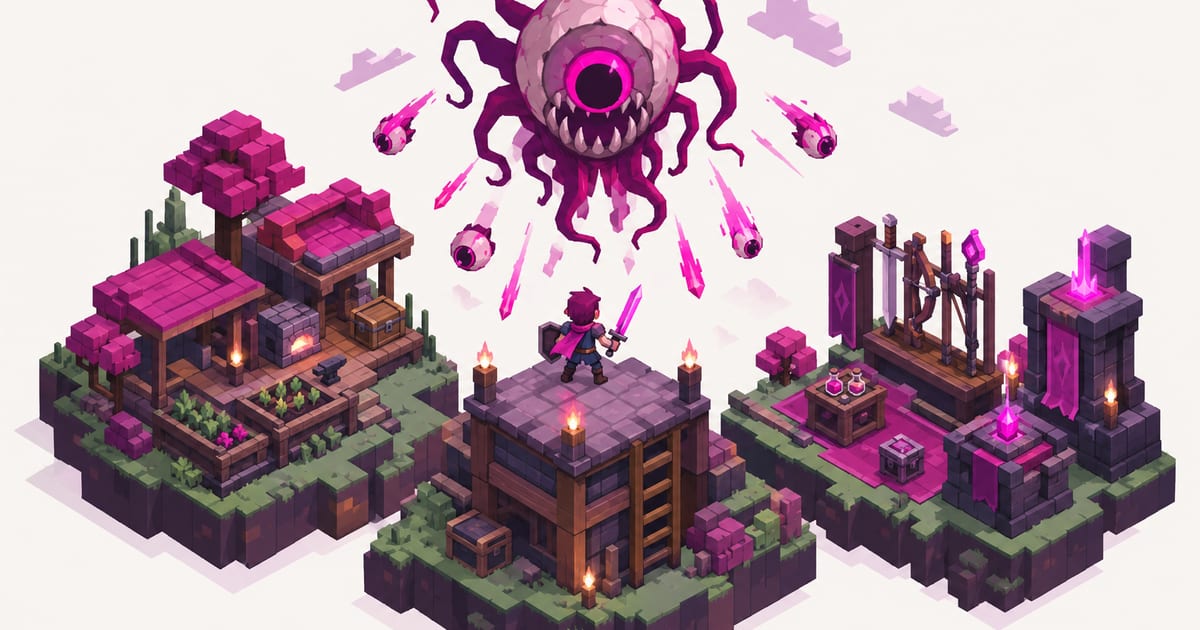
Every run through terraria bosses is a test of preparation, not twitch reflexes. They are a test of whether you prepared before the summon item left your inventory. The players who struggle usually skip the boring part: flattening an arena, placing buff furniture, checking their class guide, and learning one attack pattern at a time. This guide walks through the practical sequence, from your first nighttime summon to the endgame, with checklists you can reuse. Treat terraria bosses as gates: each one tells you what your gear, mobility, and arena are missing.
Read terraria bosses as gates, not roadblocks
A boss fight is a diagnostic. If you die in the first ten seconds, the problem is usually positioning or summon timing, not damage. If you survive but run out of time, the problem is damage uptime. If you keep getting clipped by one attack, build a dedicated practice arena and stop bringing every buff you own. The goal is not to brute-force every fight with the same loadout; it is to identify the missing piece and fix only that piece.
A reusable pre-fight checklist:
- Flat arena at least two screens wide, with a row of platforms every few jumps.
- Campfire, Heart Lantern, and a nearby nurse or bed if your world has the housing for it.
- Movement: boots, cloud or bottle access, hook, and a mount if the fight rewards vertical movement.
- Class weapon with enough range to hit while dodging. Melee can work, but bring a thrown or projectile option for phases where contact damage is constant.
- Buffs: Ironskin, Regeneration, Swiftness, Well Fed, and any class-specific potion you can craft reliably.
- A clear summon window. Do not summon a nighttime boss just before dawn and wonder why it leaves.
Early terraria bosses: build first, summon second
The first tier is where new players learn that the arena matters more than the weapon. King Slime is a movement check: build a long flat runway, keep him from boxing you in, and use piercing or area damage on the minions. Eye of Cthulhu is a reading check: its dash pattern is simple, but the fight punishes players who stay on the ground with no vertical escape. Eater of Worlds and Brain of Cthulhu are crowd-control checks; bring a weapon that hits multiple segments or clears creepers quickly.
Do not rush the evil boss before you have a real weapon and some form of healing. A common trap is summoning Eater of Worlds in a cramped corruption chasm, then dying to the terrain instead of the boss. Flatten a surface arena first, or build a wide underground box with enough room to circle. Queen Bee is optional but worth doing early if you want access to useful accessories; fight her in a wide hive room or a surface arena, not in a narrow corridor.
Skeletron is the first hard gate for many players. The hands punish greedy damage, and the skull's spin forces you to move in one direction without panicking. Clear the dungeon entrance, build a flat platform layer above it, and use a weapon that can hit the hands without forcing you into contact range. If you are playing a summoner, check the summoner guide before this fight; minion count and whip range matter more than raw defense.
A first-arena pattern that keeps working
Pick a central spawn point, place two layers of long platforms, and leave the middle open for vertical dodging. Put the nurse or a bed near the arena so a death does not mean a two-minute walk. Keep your buff station close but not inside the fight space. This pattern works for most early terraria bosses and scales into Hardmode with minor changes.
Pre-Hardmode terraria bosses and the Wall of Flesh
Before the Wall of Flesh, clean up the optional fights that give you movement or damage upgrades. Queen Bee, Skeletron, and the evil boss are not just loot checks; they teach patterns you will reuse. The Wall of Flesh is different. It is a forced-scroll fight, so the arena is a long bridge through the Underworld, not a box. Build the bridge before you summon, leave gaps for lava, and decide in advance whether you are running left or right. A terraria wall of flesh guide is worth reading because the fight rewards planning more than reflexes.
The Wall of Flesh also marks the point where you should stop treating bosses as isolated events. After it dies, the world changes, enemies get harder, and your old arena may become a liability. Before you trigger it, move your NPCs into safe housing, protect your base from spread, and make sure you have a backup weapon for the new enemy types. If you are unsure about NPC rooms, the terraria housing guide covers the basics.
Hardmode terraria bosses: arena upgrades and damage checks
Hardmode bosses punish small arenas. The mechanical bosses all reward wide horizontal movement, and several of them punish players who stay in one spot. Build a surface arena with multiple platform layers, place a few peace candles or sunflowers around the edges, and keep your spawn point close. Wings, a dash accessory, and a fast mount change these fights more than a small damage increase.
The Destroyer is a positioning fight. Stay above the body, watch for the head, and use piercing weapons to hit segments while you move. The Twins reward target discipline: kill one eye before you split damage, and use vertical movement when the cursed fire phase starts. Skeletron Prime is an endurance check; ignore the arms unless they are blocking your damage, and focus the head when the spin phase gives you a window. Do not summon all three at once unless you are deliberately doing a challenge run.
A simple Hardmode arena checklist:
| Element | Why it matters | Common mistake |
|---|---|---|
| Wide runway | Gives you space to outrun dashes and projectiles | Fighting in a base with chests and walls |
| Vertical platforms | Lets you dodge ground-based attacks | Standing on one flat layer |
| Buff station | Keeps regeneration and defense online | Forgetting to refresh buffs after a death |
| Spawn bed | Cuts downtime between attempts | Spawning across the map |
| Backup weapon | Covers phases your main weapon cannot hit | Bringing one damage type with no range |
Mechanical terraria bosses: fight the terrain too
The mechanical fights are often lost before the boss appears. If your arena has uneven ground, random blocks, or a nearby house full of NPCs, you are fighting the terrain as much as the boss. Clear the space, remove low ceilings, and make sure your hook has something to grab. A good rule: if you cannot cross the arena in one continuous run without jumping into a wall, it is not ready.
Use the first attempt as a scouting run. Note which attack kills you, how much time you spend healing, and whether your damage feels consistent. Change one variable at a time: swap a movement accessory, upgrade a weapon, or add a buff station. Do not rebuild the entire arena after every death. The players who improve fastest are the ones who keep a short note of what actually went wrong.
Plantera, Golem, and the late-game terraria bosses
Plantera changes the rhythm again. You fight in the Underground Jungle, so the arena has to be carved out, not dropped from the sky. Clear a large open space around the bulb, add platforms for vertical movement, and remove vines or blocks that snag your hook. If the fight spills into a narrow tunnel, you lose the ability to circle. Golem is more forgiving, but the temple room still benefits from cleared space and a way to dodge the fists without cornering yourself.
Duke Fishron and Empress of Light are optional difficulty spikes. They are not required for progression, but they teach clean dodging and reward players who learn a fixed pattern. If you are struggling with the required bosses, do not treat these as mandatory detours. Come back when your movement and damage are consistent. The same applies to event bosses: they are useful, but they should not distract you from the next progression gate.
Moon Lord and the final terraria bosses check
Before the Moon Lord, you need a clean arena, a reliable healing loop, and a plan for the Celestial Pillars. The pillars are a gear check: if you cannot clear them without dying repeatedly, the Moon Lord will expose the same weakness. Build a wide surface arena with open sky, place your buff station, and keep a mount or dash ready for the beam and hand attacks. The fight is long enough that panic healing will run you dry; learn the rhythm and heal between patterns, not during them.
After the Moon Lord, the remaining challenge is optional. You can chase rare drops, try secret seeds, or build a better arena for fun. The important part is that the final fight should feel like a summary of everything you practiced: movement, positioning, damage uptime, and knowing when to retreat.
The throughline across all terraria bosses is preparation. Every fight gives you information. If an arena is too small, fix the arena. If a weapon cannot hit the boss during its dangerous phase, change the weapon. If you keep dying to one attack, practice that attack instead of grinding for a slightly better sword. Treat each loss as a note, and the next attempt becomes a plan rather than a gamble.
Frequently Asked Questions
What order should I fight terraria bosses in?
There is no single required order, but the practical path is King Slime or Eye of Cthulhu, the evil biome boss, Queen Bee and Skeletron, then the Wall of Flesh. In Hardmode, fight the mechanical bosses, Plantera, Golem, and the Celestial Pillars before the Moon Lord. Skip optional bosses if they are blocking your progression; come back when your gear is stronger.
Do I need a giant arena for every boss?
No, but you need enough flat space to move without hitting walls. Early bosses can be fought on a two-layer platform runway. Hardmode bosses usually need a wider surface arena with vertical options. Plantera needs a cleared Underground Jungle space. Build for the fight you are attempting, and keep the arena free of NPCs, chests, and random blocks that snag your hook.
Why can't I summon a boss?
Most summons fail because of the wrong time, biome, or missing item. Night bosses need it to be night; some bosses need a specific biome or altar. Check that you are using the correct summon item and that no other boss is active. If the item is consumed and nothing appears, you are probably outside the valid conditions. Verify in-game, since requirements can vary by boss and platform.
What should I do after dying to a boss repeatedly?
Change one variable at a time. If you die instantly, fix positioning and arena space. If you survive but run out of time, improve damage uptime or weapon choice. If one attack keeps killing you, practice dodging it without trying to win. Keep buffs refreshed, use a nearby bed, and take a short break. Grinding the same attempt with the same loadout rarely teaches you anything new.