 Terraria Wiki Fieldbook
terraria housing: a practical guide to valid NPC rooms
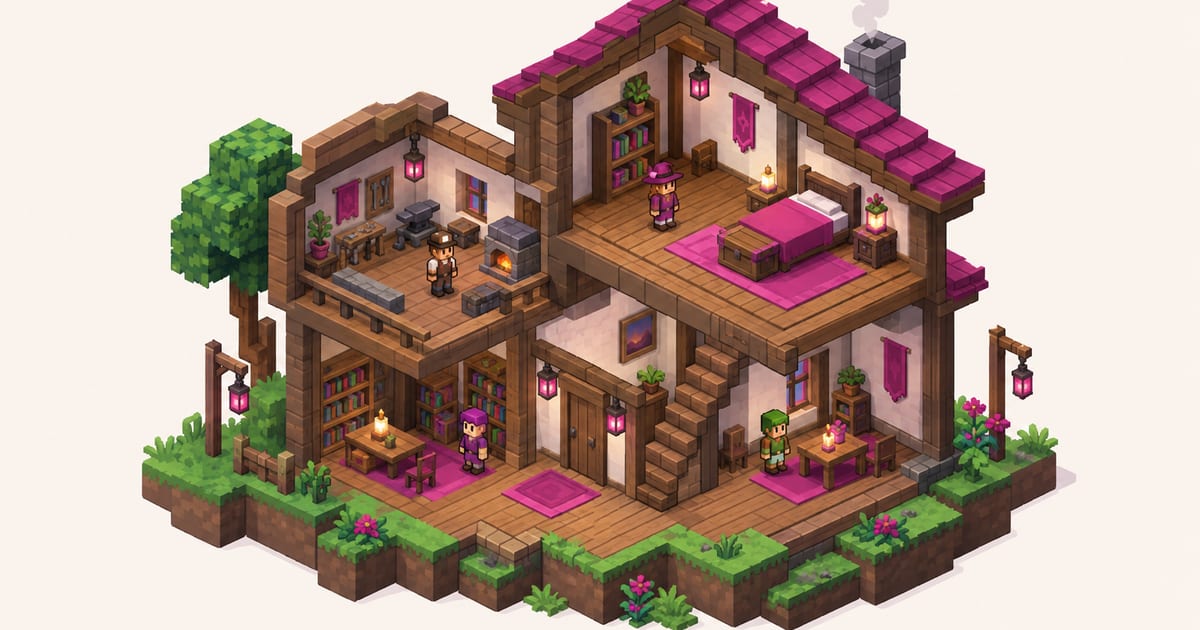
Good terraria housing is less about decoration and more about satisfying a short checklist the game runs every time an NPC tries to move in. If a room fails one item—background walls, a door, light, comfort, or standing space—the NPC will not arrive, no matter how nice the furniture looks. The fix is usually boring: close the gap, replace natural walls, add a chair, or query the room from the Housing Menu. This guide walks through the checks, then shows layouts that stay practical as your world grows.
terraria housing basics: what makes a room valid
Terraria checks a room when you open the Housing Menu and click Query. The menu can assign an NPC to a house or tell you what is missing. A valid house needs an enclosed space, player-placed background walls covering the interior, a door or platform entry, a light source, a comfort item, and a solid tile where the NPC can stand. The room must be within the size limits—30 tiles minimum total area, 750 maximum—and it cannot be in the corruption or crimson. Use the query result as the source of truth; it saves guesswork.
Size, walls, and entry
Most failed rooms are too small or too open. A tiny 4x5 closet may look like a room, but the total tile count matters. Build a little bigger than you think you need, then use the Housing Menu to confirm. Background walls must be placed by you, not natural dirt or stone walls. Knock out natural walls and replace them, or the game treats the interior as outdoors. The entry can be a door, a platform, or a trapdoor, but there must be a clear path in and out. A solid row of blocks with no opening is not a house, even if every other requirement is met.
Light, comfort, and stand space
Light sources include torches, candles, lamps, and similar furniture. Comfort items include chairs, benches, beds, and other seating. You do not need both a table and a chair for validity, but a table and chair make a useful crafting room and are easy to remember. Place at least one solid block inside the room for the NPC to stand on—platforms alone can cause trouble if that is the only floor. Keep the floor flat and unobstructed. If the NPC has nowhere to stand at night, the room may fail or the NPC may behave strangely.
terraria housing layouts: boxes, apartments, and pylons
Once you understand the checks, terraria housing becomes a layout problem. Early on, build a row of identical rooms with a shared corridor. Each room needs its own walls, entry, light, comfort item, and stand tile; shared outer walls are fine. A 7x5 or 8x5 interior is easy to work with and leaves room for a table, chair, torch, and a small platform shelf. Do not make rooms so large that you waste blocks or so small that the query rejects them. Copy a working room instead of redesigning from scratch.
A starter apartment block
Pick a flat spot near your spawn point. Build a three-story block, each floor with rooms on both sides of a central hallway. Use doors between rooms and the hallway, and put a torch and chair in every room. Add a table only where you want crafting access. Run the Housing Menu query on each room before you move on. If one room fails, compare it to a working room: missing wall, missing light, missing comfort item, or a hole in the floor. Fix the difference, not the whole building.
Pylons and village spacing
Pylons are the practical reason to care about terraria housing beyond the first dozen NPCs. Each pylon needs NPCs living nearby, and the exact requirement is easiest to confirm in-game with the pylon's tooltip or the Housing Menu. Spread villages across the world so you can teleport between biomes. Keep corruption away from your villages; if the corruption spreads to the houses, NPCs may refuse to live there. A small cluster of valid rooms near a pylon is enough. For more construction patterns, see terraria building.
terraria housing mistakes and fixes
Most terraria housing problems are small and local. A single missing wall tile behind a torch, a door replaced by a solid block, a platform floor with no solid stand tile, or a room that touches the corruption can all invalidate a house. The Housing Menu is deliberately blunt: it tells you whether a room is valid and lets you assign NPCs. Use it before you build more rooms. If an NPC will not move, do not assume the NPC is bugged. Check the room first.
Common mistakes checklist
- Natural walls left in place instead of player-placed walls.
- A hole in the wall or floor that lets the room count as open.
- No light source, or a light source placed outside the room.
- No comfort item, or a comfort item placed in the hallway.
- No solid tile for the NPC to stand on.
- Corruption or crimson too close to the house.
- Too many NPCs assigned to one room; each NPC needs a separate valid house.
One more common mistake is building a house around a crafting station and forgetting the comfort item. Another is using a platform as the only floor and expecting the NPC to stand on it. Platforms are useful for entries and shelves, but give the NPC at least one solid block. If you are placing the Witch Doctor, remember that his inventory changes with his housing biome; see terraria witch doctor for the jungle housing detail.
terraria housing for progression and boss prep
Terraria housing is not just a cosmetic side project. NPCs unlock services, and services make boss fights and class builds easier. The Nurse sells healing, the Dryad sells nature-related items, the Goblin Tinkerer handles reforges, and the Witch Doctor sells summoning gear when housed correctly. Build valid rooms early, then add specialized villages as you progress. If you are planning a boss run, keep your housing away from the arena so NPCs do not wander into the fight. For fight order and arena tips, see terraria bosses. For class-specific gear planning, use terraria class guide.
Housing near biomes
Some NPCs prefer or require specific biomes for their shop inventory. The Witch Doctor is the classic example; the Painter and others also have preferences. You do not need to memorize every preference at once. Place the NPC, check the shop, and move the house if the inventory is wrong. Keep biome villages small: three to five valid rooms near a pylon, with a clear path to the pylon. Avoid mixing corruption into a village just to save blocks. A clean, valid room in the right biome beats a fancy invalid room every time.
Querying and assigning without guesswork
The Housing Menu is the only housing tool you need. Open it, click Query, and hover over a room. Read the result, fix the first problem it lists, and query again. When the room is valid, click the NPC portrait and then click the room to assign them. If the NPC does not arrive immediately, wait a moment and check that the room is still valid. Do not assign every NPC to the first valid room you build; one room holds one NPC. Keep a few empty valid rooms ready so new arrivals have somewhere to go.
terraria housing checklist before you walk away
Before you leave a new village, open the Housing Menu and query every room. Confirm the room is valid, assign the NPC you want, and check that the NPC actually arrives. Look for holes, natural walls, missing light, missing comfort, and missing stand tiles. Keep a stack of torches, chairs, and doors in your inventory so you can fix problems on the spot. If a room fails and you cannot see why, copy a known-good room next to it and compare tile by tile. That is faster than guessing.
Good terraria housing is a habit: build a working room, copy it, query it, and move on. The rules are simple enough that you can satisfy them in a few minutes per NPC, and the payoff is a world where every vendor, healer, and summoner is available when you need them. Treat the Housing Menu as your checklist, keep corruption away from your villages, and your terraria housing will stay valid long after the first night.
Frequently Asked Questions
Why won't my NPC move into a house in Terraria?
Open the Housing Menu, click Query, and hover the room. The game will list what is missing. Common causes are natural background walls, a hole in the wall or floor, no light source, no comfort item, no solid stand tile, or corruption too close. Fix the listed problem and query again before assigning the NPC.
How big does a Terraria house need to be?
A valid room needs at least 30 tiles of total area and no more than 750. In practice, a 7x5 or 8x5 interior is comfortable and easy to furnish. Do not rely on eyeballing it: build the room, then use the Housing Menu query. If it fails, add a row of blocks or remove excess space until the query says valid.
Can NPCs share a house in Terraria?
One NPC per valid house. You can put many houses in one building, but each room needs its own walls, entry, light, comfort item, and stand tile. Shared outer walls and a shared hallway are fine. Use the Housing Menu to assign each NPC to a different room; if two NPCs are assigned to the same room, one will not have a home.
Do I need a table and chair for Terraria housing?
A comfort item is required, and a chair counts, so a chair plus a torch is enough for validity. A table is not required by the housing check, though a table and chair make a crafting station and are worth adding. Use the Housing Menu query to confirm; if the room fails, the missing piece is often light or a solid stand tile, not the table.