 Terraria Wiki Fieldbook
terraria npc guide: rooms, happiness, and shop picks
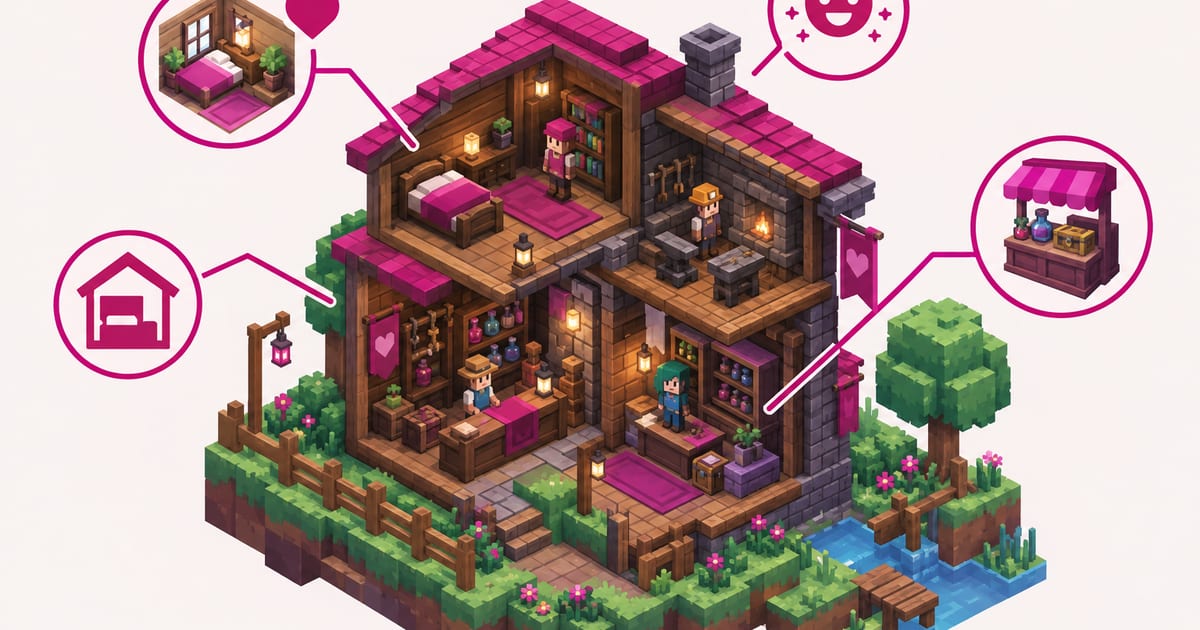
A terraria npc is more than a shop with legs. The Guide who spawns beside you, the Merchant who sells piggy banks, the Nurse who heals you mid-fight—they all follow the same housing and happiness rules. Get those rules right and your world becomes a network of safe rooms, useful shops, and fast travel. Get them wrong and you'll spend an evening asking why the Arms Dealer is sulking in a corridor. This guide is the practical version: what to build, where to build it, and how to fix the usual problems without tearing down your base.
What a terraria npc needs before it moves in
Every terraria npc checks the same basic boxes. The room must be enclosed, have background walls, and include a door or other valid entrance. It needs a light source, a comfort item such as a chair or bed, and a flat surface item such as a table or work bench. The game does not care whether the furniture matches. It cares that the room is a real room and that the housing menu says it is valid.
Build small, not grand. A compact room with a door, a torch, a chair, a table, and full background walls will pass. If you can see the sky through the back wall, it is not a house. If the door is blocked by a chest, the game may not count the entrance. If the room sits in Corruption or Crimson, you are asking for trouble later; keep NPC housing clear of spreading biomes.
Why your terraria npc won't move in
When a terraria npc refuses to move in, the housing menu is the source of truth. Open it, click the query banner, and hover over the room. The game will tell you whether the house is valid, whether it is already assigned, and what is missing. Most failures are boring: a gap in the back wall, a missing light source, no comfort item, or a room that is too small.
A common mistake is building with natural walls. Natural dirt walls behind a room do not count as player-placed walls for housing. You need to place walls yourself, and you need to cover the whole interior. Another common mistake is assuming a bed is enough. A bed counts as comfort, but the room still needs a light source and a flat surface item.
Use the terraria housing guide if you want a room-by-room checklist. It is faster than guessing at the housing query.
The two-minute housing audit
- Check every tile of background wall. One missing patch can invalidate the room.
- Make sure the door is not blocked by furniture or a chest.
- Confirm a light source, a comfort item, and a flat surface item.
- Move the house away from Corruption or Crimson if the query looks odd.
- Check whether the room is already assigned to another NPC.
Happiness: the terraria npc system most players ignore
The terraria npc happiness system is easy to ignore until you notice shop prices climbing. Each terraria npc has preferences: a biome they like, neighbors they tolerate, and neighbors they dislike. Crowding matters too. Put six NPCs in one tight tower and several of them will be unhappy even if the rooms are valid. A terraria npc who is crowded or placed in the wrong biome may charge more and offer worse prices.
You do not need to optimize every pairing on day one. Start by spreading NPCs into a few buildings instead of one mega-base. Keep the Guide and Merchant near your spawn point, put the Nurse somewhere safe, and give the Demolitionist some space. Then check the housing menu and talk to each NPC. Their dialogue tells you what they think of their home. Happy NPCs are the ones who sell pylons, and pylons are the real payoff: a fast-travel network that saves minutes every session.
Pylon planning without spreadsheets
Pick a handful of biomes you actually use. Build two or three valid rooms in each, then place NPCs who like that biome. You do not need perfect pairings early. If someone complains about crowding, move a neighbor rather than rebuilding the whole village. If a pylon stops working, check whether the NPCs nearby are still alive, still housed, and still close enough to count. Keep at least a small pair near each pylon you rely on.
The exact preferences are best checked in-game or on a current wiki page, because they are specific and easy to misremember. The practical rule is simple: spread out, match biomes when you can, and do not stack every NPC in one room.
Shops, unlocks, and when to buy
A terraria npc shop is not a fixed menu. Some items appear only at certain times, in certain biomes, or after milestones. Talk to NPCs at different times of day, check back after boss kills, and move shopkeepers into the biome they prefer. The Merchant, Arms Dealer, Nurse, and Demolitionist all become more useful as your world progresses, but they are not vending machines. Their stock reflects where they live and what you have done.
This is why rushing boss progression can leave you with gear you cannot support. If you are about to fight a new boss, check your NPC shops first. Potions, ammo, and utility items are often cheaper than crafting from scratch. The terraria bosses guide is a good companion here: it tells you what is coming next so you know which shop upgrades are worth chasing. If you are still deciding on a damage type, the terraria class guide helps you pick the NPC purchases that actually fit your build.
Moving NPCs and fixing a broken village
You can reassign a terraria npc through the housing menu without rebuilding the room. Click the NPC's portrait, then click the house you want them to move into. If the target room is valid and empty, they will move in. If nothing happens, the room is invalid, already occupied, or too close to a problem area.
Do not break the only valid house in a village while a pylon depends on it. Pylons need NPCs nearby to function, so moving everyone out can cut your travel network. Keep one or two residents in place until the replacement rooms are finished. Also keep doors accessible. NPCs can open doors, but they cannot path through furniture that blocks the doorway. If an NPC seems stuck, check the floor and the door before you assume the game is broken.
Final checklist before you build
- Build compact rooms with full player-placed background walls.
- Include a door, light source, comfort item, and flat surface item.
- Use the housing query to verify every room.
- Spread NPCs across biomes instead of stacking them in one tower.
- Check happiness dialogue before buying pylons or expensive shop items.
- Keep pylon villages staffed when you rearrange housing.
Treat your terraria npc layout as infrastructure, not decoration. A few minutes spent fixing walls and spreading residents will save hours of walking, overpaying, and wondering why a shopkeeper will not sell the one item you need. Build the rooms properly, check the housing menu, and let the terraria npc network do the boring work for you.
Frequently Asked Questions
How do I make a valid house for a terraria npc?
Build a small enclosed room, place background walls across the whole interior, and add a door. Include a light source such as a torch, a comfort item such as a chair or bed, and a flat surface item such as a table or work bench. Then open the housing menu and query the room. If the game says it is valid, assign the NPC.
Why won't a terraria npc move into my empty room?
The room is probably missing something the housing check requires: a full back wall, a light source, a comfort item, a flat surface item, or an accessible entrance. It may also be already assigned, too small, or too close to Corruption. Use the housing query first; it names the problem. If the room is valid but unassigned, check that you actually assigned the NPC to it.
Does terraria npc happiness really change prices?
Yes. Happiness affects shop prices and whether an NPC will sell a pylon. Biome, crowding, and neighbors all matter. An NPC crammed into a tower with five others may charge more than one placed in a preferred biome with space. Talk to them and check the housing menu. If prices look bad, spread the village out before buying expensive items.
Can I move NPCs without breaking my pylons?
You can reassign NPCs through the housing menu, but pylons need residents nearby to keep working. Move one NPC at a time, and finish the replacement rooms before emptying a pylon village. If a pylon stops responding, check that at least a small pair of NPCs is still housed close by. Reassign them back or move new residents in.